
























































-
Science and Engineering of Materials
Donald R. Askeland, Benjamin Wheatley, and Wendelin Wright
Askeland/Wright/Wheatley's THE SCIENCE AND ENGINEERING OF MATERIALS, 8th Edition, aids engineering students in understanding the relationship between the structure, processing and properties of materials. With a wealth of material, instructors can tailor their focus to emphasize specific areas such as materials, mechanical behavior or physical properties. The text serves as a comprehensive reference for future courses in manufacturing, design or materials selection. New chapters on biomaterials and sustainable design reflect content students will encounter in their careers. Emphasizing a science-based approach, the book connects materials' structures at various scales to their properties, highlighting how materials change over time and under different conditions, which is crucial for material innovation and application.
-
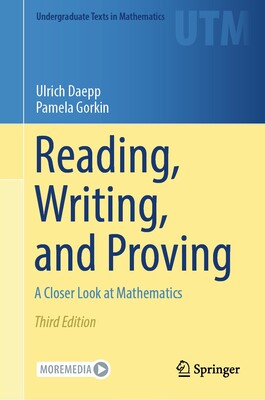
Reading, Writing, and Proving
Ulrich Daepp and Pamela Gorkin
This book, which assumes only a precalculus background, aids students in their transition to higher-level mathematics. The authors begin by providing a great deal of guidance on how to approach definitions, examples, and theorems in mathematics and end with suggested projects for independent study. The reader will follow Pólya's four step approach to problem solving: analyzing the problem, devising a plan to solve the problem, carrying out that plan, and then determining the implication of the result. Special emphasis is placed on reading proofs carefully and writing them well. The authors have included a wide variety of exercises with solutions, examples, illustrations, and problems, making the book ideal for independent study.
The third edition provides the reader with significant changes, all of which have been artfully designed to enhance the learning and teaching experience. The topic of mathematical induction has been modified and moved to an earlier part of the text. Two technical chapters and many proofs have been revised, and a chapter on visualizing complex functions has been added. There are many new problems, an additional spotlight on professional ethics, new projects and some revisions of others. Short videos about each chapter and some solutions are freely available as electronic supplementary material. An instructor solutions manual for all odd-numbered problems is available on Springer Nature’s extra materials archive.
While standard texts in this area prepare students for future courses in algebra, this book also includes chapters on sequences, convergence, and metric spaces for those wanting to bridge the gap between courses in calculus and those in analysis.
-
Living with Gandhi: Experiments in Utopia
Karline McLain
Mahatma Gandhi was an anticolonial activist, lawyer, and politician. Less famously, but no less importantly, he was also a back-to-the-land farmer, a founder of communes, and a seeker of utopia. Living with Gandhi: Experiments in Utopia tells the story of everyday life at four of Gandhi’s communities in India and South Africa. It explores who lived at each community alongside Gandhi, the experiments they undertook in the shared pursuit of universal wellbeing, and the connections that were forged between daily life and larger socio-political issues such as racial inequality, caste reform, and anticolonial activism. The need to simplify life and focus on the greater good is no less urgent now than it was in Gandhi’s time.
Reading about Gandhi’s communities allows us to think about a range of topics that can help us to formulate our own conception of the good life, including how to spend our finite time together on this earth; how the boundaries of inclusion and exclusion operate in our daily lives; and whether or to what extent self-sacrifice is necessary for universal wellbeing.
-
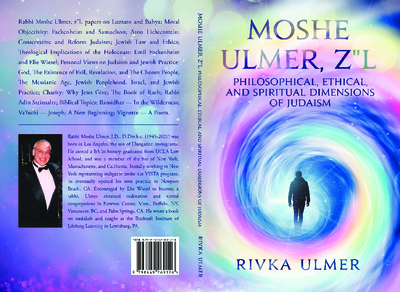
1) Sing and Rejoice, O daughter of Zion (Zechariah 2:14)- Studies in Pesiqta Rabbati
Rivka Ulmer
Chapters focusing on different aspects of Pesiqta Rabbati, a midrashic homiletic work, encompassing semiotic theories, prophesies, apocalypticism, halakhic issues, Chanukah, global theories of midrash, Hebrew manuscripts. messiah, scriptural quotations, mashal, historical issues, Greek loanwords, Parma, Casanata, JTS, Genizah, Vienna, and versions.
-

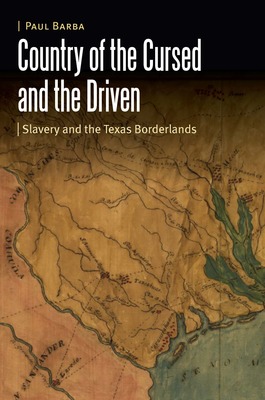
Gulf South Rebels, Insurgents, and Revolutionaries, 1700-1860: Bonds of Rebellion
Paul Barba
Gulf South Rebels, Insurgents, and Revolutionaries is a collection of essays on the tangled yet variegated histories of rebellious actors in the eighteenth- and nineteenth-century Gulf South and its linked environs. Following diverse rebels, revolutionaries, militants, insurgents, opportunists, and subversives from the early eighteenth-century alluvial floodplains of Louisiana to the mid-nineteenth-century coastal prairies of southeast Texas, this volume recasts the Gulf South as a centripetal region in the history of early America, a place where worlds collided, overlapped, combined, and renewed themselves, where revolutionary fervor could thrive and percolate, mix, and coagulate. Bound together by violence, exploitation, greed, honor, family, community, and ideological commitment, Gulf South rebels drew from longer traditions of insurgency, even as they forged new ones. Their legacies would resonate well beyond their seemingly localized disturbances, from the Caribbean to western Europe, illuminating how Indigenous, Black, and Euro-American Gulf South rebels operated in a rapidly shrinking, colonial world.
-
Building Community at Work
Neil Boyd
Employees and managers alike seek ways to be happy and effective in the workplace--an arena in which we all spend many hours of our week. Community is an essential ingredient in a healthy and productive work environment: when asked what people like about their jobs, it's not uncommon to hear "We're like a family," or "Here, I'm part of a community." Considering the numerous models conceptualized to support creation of emotionally satisfying and behaviorally productive work settings, it is perhaps surprising that the topic of community at work has been underexplored.
Based on sound theoretical foundations and empirical findings from the science of management and community research and action, Building Community at Work guides scholars, employees, and leaders of organizations toward creating communities at work in any institutional sector. To make abstract theory concrete, Neil Boyd weaves scientific models and concepts together with the story of a young business owner's journey to becoming an industry leader in building communities. The book also provides practical considerations for professionals to analyze and conceive ways to create communities at work. In Boyd's accessible and grounded analysis, find the building blocks for transforming the workplace into a flourishing community. -
African Feminist Girlhood Studies and Development
Cymone Fourshey, Marla Jaksch, and Relebohile Moletsane
This project draws on African feminisms to propose major questions about the agency of girls. The central research questions of the book are: what is the history of girlhood on the ground in various regions of Africa? In African contexts, how are humanistic approaches helping social scientists and development practitioners to unravel some of the seemingly unsolvable challenges? And, finally, in what ways might development projects defined and shaped by adolescent African girls lead us to better understandings of challenges they face and beneficial as well as realistic solutions and critical responses to poverty, development, and inequality? The authors expand the existing conversation by drawing upon epistemological foundations emerging from groundbreaking work in the history of gender in Africa. The data and analyses presented in this work contribute to the fields of African politics, girlhood studies, African feminisms, African histories, and development studies.
-
As If!
Chase Gregory
In As If!, Chase Gregory explores the stylistically strategic, often campy, and productively fraught cross-identifications of early queer criticism. Gregory calls this form of aids-era criticism as if!—a mode of writing in which authors struggle to read, write, and identify with and across categories of race, sexuality, and gender. Analyzing the work of Robert Reid-Pharr, Deborah E. McDowell, Barbara Johnson, and Eve Kosofsky Sedgwick, Gregory shows how their writing productively challenges fixed ideas of identity and knowledge production. Using these four writers as case studies of a larger trend within early queer criticism, Gregory demonstrates that even when critical attempts at relation are met by impasse, as if! criticism breaks down social relation, especially within those fields influenced by queer theory, deconstructionist feminist theory, and Black feminist theory. By advocating a return to as if! criticism as a politically useful blueprint for contemporary cultural inquiry, Gregory draws attention to the obstacles to forging identification across difference and insists on the impossible project of solidarity across such difference.
-
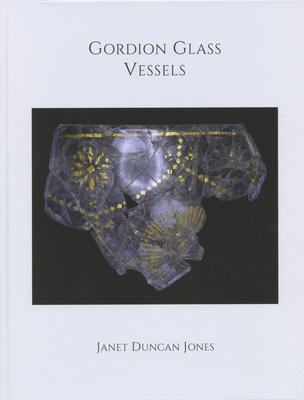
Gordion Glass Vessels
Janet Duncan Jones
This volume is a study of the ancient glass vessels from 70 years of excavation at Gordion in central Anatolia. The corpus of vessel glass, currently numbering over 1,800 fragments, is extraordinary in that it includes exceptional examples of vessels from excavated contexts ranging in date from the Iron Age to the Roman period and representing every major glass forming technology of the ancient world. Few sites have produced so many significant glass vessels of consistently high quality, dating from an extended period of time. Among these finds are several categories of glass that are either unparalleled elsewhere, of earlier date than comparable material, or unusually concentrated at Gordion. This body of material currently stands alone in Anatolia, a region from which comparable finds are so far elusive, especially for the pre-Roman period. Several of the Gordion finds have the potential to rewrite aspects of what we know about the production of glass in the 1st millennium BCE, extending the record of consumption and, perhaps, production earlier and farther north in the Iron Age, and farther east in the Classical and Hellenistic periods than previously thought.
-

Soseki Natsume's Collected Haiku
Erik R. Lofgren
Soseki Natsume is Japan's most popular writer, well known in the West for his satirical novels like I Am a Cat, Botchan and Kokoro. However, he first made a name for himself in Japan as a poet, publishing hundreds of haiku over a period of several decades. Until now very few of these have appeared in English.
Soseki Natsume's Collected Haiku presents 1,000 of the author's most famous verses, selected and translated by Erik Lofgren, a leading Soseki expert. The poems are grouped into chapters corresponding to the five traditional Japanese seasons (New Year, Spring, Summer, Autumn and Winter).
In these poems, Soseki explores themes ranging from wabi sabi Zen simplicity to his personal experiences including several years studying in England. His verses are evocative of the splendor of the natural world, the power of human emotions, and the serenity found in living a peaceful life.
Each poem is presented in the original Japanese with a Romanized version and English translation. Audio recordings of the English and Japanese versions are provided online. -

Activated Carbon : Synthesis, Analysis, and Industrial Applications
Jude A. Okolie and Alivia Mukherjee
Activated Carbon: Synthesis, Analysis, and Industrial Applications explores the fundamentals of activated carbon production and characterization, modification techniques and applications of machine learning in the field of activated carbon synthesis and applications. The book is divided into three parts to enable readers and researchers of all levels easy access to the information herein. Section 1 is on Synthesis methods and characterization techniques. The next six chapters on Section 2 focus on diverse industrial applications of activated carbon. The last section is on machine learning applications as well as research progress in activated carbon synthesis, modification, and diverse applications.Written for researchers, graduate and undergraduate students, academics, and industry professionals in the fields of sustainable environmental science and chemical engineering, this book will be a welcomed reference for those who wish to better understand the role of activated carbon in solving sustainability challenges in the world related to energy shortage, greenhouse gas emissions, and environmental issues. -- back cover
-

The Lives of Bats: A Natural History
DeeAnn Reeder
Bats are the second-largest order of mammals and inhabit almost every corner of the globe, but these secretive creatures are often maligned and misunderstood. With more than 1,400 species worldwide, they are crucial contributors to ecosystems, controlling insect populations and fulfilling an essential role as pollinators. This one-of-a-kind guide showcases the unique characteristics and extraordinary diversity of our planet’s bat life, providing an inviting introduction to these marvelous creatures. Written by a leading expert and packed with the latest scientific findings, The Lives of Bats blends diagrams and stunning photographs with in-depth coverage of profiled species to offer an incomparable look at these unsung heroes of the natural world.
- Includes a wealth of stunning color photos
- Features dozens of representative species profiles that demonstrate the remarkable diversity and adaptability of the only mammals on Earth capable of powered flight
- Covers key topics such as anatomy, echolocation, diet, thermoregulation, mating, diseases, and immunity
- Discusses human relationships with bats
- Essential reading for wildlife lovers everywhere
-
Economic Principles and Problems
Geoffrey Schneider
Economic Principles and Problems: A Pluralistic Introduction offers a comprehensive introduction to the major perspectives in modern economics, including mainstream and heterodox approaches. Through providing multiple views of markets and how they work, it leaves readers better able to understand and analyze the complex behaviors of consumers, firms, and government officials, as well as the likely impact of a variety of economic events and policies.
Including explicit coverage of mainstream economics and the major heterodox schools of economic thought—institutionalists, feminists, radical political economists, post-Keynesians, Austrians, and social economists—it allows the reader to choose which ideas they find most compelling in explaining modern economic realities. This second edition includes new and expanded material on international trade (to include disintegration and Brexit), climate issues and perspectives, including degrowth, inter-temporal exchanges and games, non-market exchanges, job opportunities, cost of education, and social media as an industry, as well as additional examples and case studies. The book’s suite of digital resources has been updated to include a test bank of multiple-choice and short-answer questions and answers, end-of-chapter questions and answers, and PowerPoint slides.
Written in an engaging style and focused on real-world examples, this textbook brings economics to life. Economic Principles and Problems offers the most contemporary and complete package for any pluralist economics class.
-
Engineering Economy
William Sullivan, Elin Wicks, and Joseph Wilck
"A succinct job description for an engineer consists of two words: problem solver. Broadly speaking, engineers use knowledge to find new ways of doing things economically. Engineering design solutions do not exist in a vacuum but within the context of a business opportunity. Given that every problem has multiple solutions, the issue is, How does one rationally select the design with the most favorable economic result? The answer to this question can also be put forth in two words: engineering economy. Engineering economy provides a systematic framework for evaluating the economic aspects of competing design solutions. Just as engineers model the stress on a support column, or the thermodynamic response of a steam turbine, they must also model the economic impact of their recommendations. Engineering economy-what is it, and why is it important? The initial reaction of many engineering students to these questions is, "Money matters will be handled by someone else. They are not something I need to worry about." In reality, any engineering project must be not only physically realizable but also economically affordable. This book is about how to make smart economic choices. Understanding and applying economic principles to engineering have never been more important"-- $c Provided by publisher.
-
Ten Measures of Beauty. Proceedings of the Midrash Section. Society of Biblical Literature.
Rivka Ulmer and W. David Nelson
Midrash; The contributions that comprise Ten Measures of Beauty, the 10th volume published by the Society of Biblical Literature’s Midrash Section, pertain to Sifra, Midrash Tadshe and Masora, Rabbi Meyuḥas ben Elijah (a biblical commentator), food and meals in midrash, and peace studies.
-
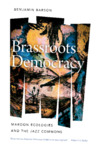
Brassroots Democracy: Maroon Ecologies and the Jazz Commons
Benjamin Barson
Brassroots Democracy recasts the birth of jazz, unearthing vibrant narratives of New Orleans musicians to reveal how early jazz was inextricably tied to the mass mobilization of freedpeople during Reconstruction and the decades that followed. Benjamin Barson presents a "music history from below," following the musicians as they built communes, performed at Civil Rights rallies, and participated in general strikes. Perhaps most importantly, Barson locates the first emancipatory revolution in the Americas—Haiti—as a nexus for cultural and political change in nineteenth-century Louisiana. In dialogue with the work of recent historians who have inverted traditional histories of Latin American and Caribbean independence by centering the influence of Haitian activists abroad, this work traces the impact of Haitian culture in New Orleans and its legacy in movements for liberation.
Brassroots Democracy demonstrates how Black musicians infused participatory music practice with innovative forms of grassroots democracy. Late nineteenth-century Black brass bands and activists rehearsed these participatory models through collective performance that embodied the democratic ethos of Black Reconstruction. Termed "Brassroots Democracy," this fusion of political and musical spheres revolutionized both. Brassroots Democracy illuminates the Black Atlantic struggles that informed music-as-world-making from the Haitian Revolution through Reconstruction to the jazz revolution. The work theorizes the roots of the New Orleans brass band tradition in the social relations grown in maroon ecologies across the Americas. Their fruits contributed to the socio-sonic commons of the music we call jazz today.
-
The History of Disruption : Social Struggle in the Atlantic World
Mehmet Dosemeci
"Why do we think of social struggles as movements? Have struggles been practiced otherwise, not as motion but as interruption, occupation, disturbance, arrest? Looking at three hundred years of Atlantic social struggle kinetically, Mehmet Dösemeci questions the axiomatic association that academics and activists have made between modern social struggles and the category of movement. Dösemeci argues that this movement politics has privileged some forms of historical struggle while obscuring others and, perhaps more damningly, reveals the complicity of social movements in the very forces they oppose. Dösemeci’s story begins with the eighteenth-century establishment of a transatlantic regime of movement that coerced goods and bodies into violent and ceaseless motion. He then details the long history of resistance to this regime, interweaving disparate social struggles such as food riots, Caribbean maroon communities, Atlantic pirates, secret societies and syndicalism, the student New Left, Black Power, radical feminism, Operaismo, and the Zapatistas into a history of politics as disruption. Dösemeci convincingly argues that this history is key to understanding the resurgence of disruptive politics in the twenty-first century and offers valuable guidance for future struggles seeking to overturn an ever-intensifying regime of movement." -- back cover of book
-
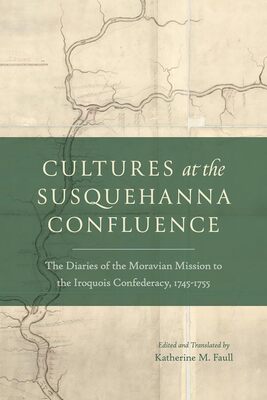
Cultures at the Susquehanna Confluence : the Diaries of the Moravian Mission to the Iroquois Confederacy, 1745-1755
Katherine Faull
Located at the confluence of the north and west branches of the Susquehanna River, Shamokin was a significant historical settlement in the region that became Pennsylvania. By the time the Moravians arrived to set up a mission in the 1740s, Shamokin had been a site of intertribal commerce and refuge for the Native peoples of Pennsylvania for several centuries. It served first as a Susquehannock, then a Shawnee, and then a primarily Lenape settlement and trading post, overseen by the Oneida leader and diplomat Shikellamy.
Cultures at the Susquehanna Confluence is an annotated translation of the diaries documenting the Moravian mission to the area. Unlike other missions of the time, the Moravians at Shamokin integrated their work and daily life into the diverse cultures they encountered, demonstrating an unusual compromise between the Church’s missionary impetus and the needs of the Six Nations of the Iroquois. The diaries counter the dominant vision of the area around Shamokin as a sinister place, revealing instead a nexus of vibrant cultural exchange where women and men speaking Lenape, Mohican, English, and German collaborated in the business of survival at a pivotal time.
The Shamokin diaries, which until now existed only in manuscript form in difficult-to-read German script in the Moravian Archives in Bethlehem, Pennsylvania, allow today’s readers to experience the Susquehanna confluence and the rich intercultural exchanges that took place there between Europeans and Native Americans. -- back cover
-
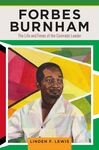
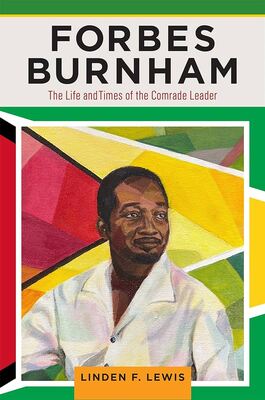
Forbes Burnham : the Life and Times of the Comrade Leader
Linden F. Lewis
It is virtually impossible to understand the history of modern Guyana without understanding the role played by Forbes Burnham. As premier of British Guiana, he led the country to independence in 1966 and spent two decades as its head of state until his death in 1985. An intensely charismatic politician, Burnham helped steer a new course for the former colony, but he was also a quintessential strongman leader, venerated by some of his citizens yet feared and despised by others.
Forbes Burnham: The Life and Times of the Comrade Leader is the first political biography of this complex and influential figure. It charts how the political party he founded, the People’s National Congress, combined nationalist rhetoric, socialist policies, and Pan-Africanist philosophies. It also explores how, in a country already deeply divided between the descendants of African slaves and Indian indentured servants, Burnham consolidated political power by intensifying ethnic polarizations. Drawing from historical archives as well as new interviews with the people who knew Burnham best, sociologist Linden F. Lewis examines how his dictatorial tendencies coexisted with his progressive convictions. Forbes Burnham is a compelling study of the nature of postcolonial leadership and its pitfalls. -- https://www.rutgersuniversitypress.org/
-
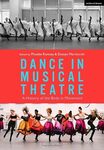
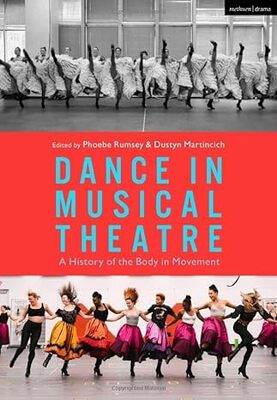
Dance in Musical Theatre : a History of the Body in Movement
Dustyn Martincich and Phoebe Rumsey
"From Oklahoma! and West Side Story, to Spring Awakening and Hamilton, dance remains one of the most important and key factors in musical theatre.
Dance in Musical Theatre offers guidelines in how to read this movement by analyzing it in terms of composition and movement vocabulary whilst simultaneously situating it both historically and critically. This collection provides the tools, terms, history, and movement theory for reading, interpreting, and centralizing a discussion of dance in musical theatre, importantly, with added emphasis on women and artists of color.
Bringing together musical theatre and dance scholars, choreographers and practitioners, this edited collection highlights musical theatre case studies that employ dance in a dramaturgically essential manner, tracking the emergence of the dancer as a key figure in the genre, and connecting the contributions to past and present choreographers. This collection foregrounds the work of the ensemble, incorporating firsthand and autoethnographic accounts that intersect with historical and cultural contexts.
Through a selection of essays, this volume conceptualizes the function of dance in musical: how it functions diegetically as a part of the story or non-diegetically as an amplification of emotion, as well as how the dancing body works to reveal character psychology by expressing an unspoken aspect of the libretto, embodying emotions or ideas through metaphor or abstraction.
Dance in Musical Theatre makes dance language accessible for instructors, students, and musical theatre enthusiasts, providing the tools to critically engage with the work of important choreographers and dancers from the beginning of the 20th century to today." -- back cover
-
Shrubs and Vines of New Jersey and the Mid-Atlantic States (Third Edition)
Christopher T. Martine and Rachel F. Martine
Illustrated field guide covering more than 200 species of shrubs and woody vines occurring naturally in the mid-Atlantic and northeastern United States.
-
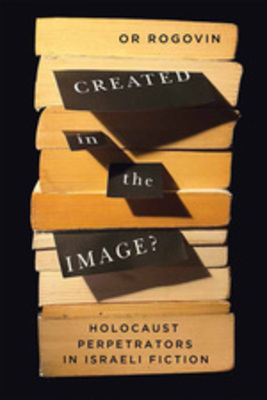
Created in the Image? Holocaust Perpetrators in Israeli Fiction
Or Rogovin
"The turn of the twenty-first century saw the rise of a brand of fiction that centres the experience and perspective of the perpetrator, thereby humanizing this character and granting it the capability to evoke our empathy. The vast scholarship published on this phenomenon, however, fails to consider Israeli writing, and with it some of the most complex characterizations of Holocaust perpetrators, imagined from the unparalleled position of a nation that was shaped from its very birth by the legacy of Holocaust victimhood and survival. In Created in the Image? Or Rogovin situates Israeli literary response to the Holocaust in the canon of perpetrator fiction for the first time. Since the state's establishment in 1948, perpetrator characterization in Israeli fiction has demonstrated a remarkable development that corresponds to changing circumstances, from the Eichmann trial to the First Intifada. While early examples depicted perpetrators stereotypically and minimally, as seen in Ka-Tzetnik's demonic and bestial Nazis in Salamandra and in the amorphous persecutor figures in Aharon Appelfeld's stories, since the mid-1980s these characters have been created in the human image, as nuanced and multidimensional individuals. The turning point came with Herr Neigel, the sensitive and self-contradictory commandant in David Grossman's See Under: Love (1986), followed by likewise multifaceted and humanized perpetrators in fiction by A.B. Yehoshua, Savyon Liebrecht, and Amir Gutfreund. Anchored in theoretical and comparative perspectives, Created in the Image? presents a groundbreaking analysis of the poetic mechanisms, moral implications, and historical contexts of this paradigm shift in the Israeli literary response to the Shoah."-- $c Provided by publisher.
-
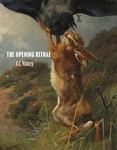
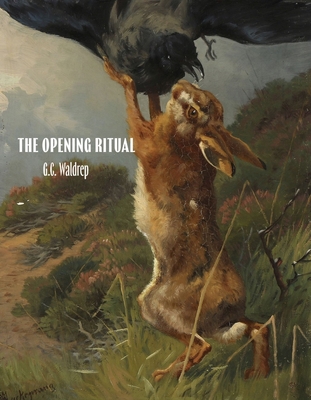
The Opening Ritual
GEORGE C. WALDREP III
"In The Opening Ritual, G. C. Waldrep contends with the failure of the body, the irreducible body, in the light of faith. What can or should “healing” mean when it can’t ever mean “wholeness” again? And what kind of architecture is “mercy” when we live inside damage? These are poems that take both the material and the spiritual seriously, that cast their unsparing glances toward “All that is not / & could never be a parable.” -- back cover
The collection concludes with a sequence of truly grand meditations on spiritual consciousness--in one the poet notes how, in the stillness of contemplation, the world begins to hum and resound with music. The Opening Ritual attends to and fashions its song from that music.
-
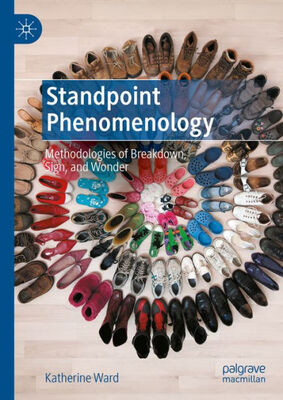
Standpoint Phenomenology : Methodologies of Breakdown, Sign, and Wonder
Katherine Ward
"This book introduces a standpoint approach to phenomenology and reconceives the phenomenological project as not an individual but a communal endeavor—one that, importantly, requires insight from across the spectrum of human experience and especially experiences of those who have traditionally been absent from the discipline. To develop this approach, the book draws on the feminist tradition of standpoint epistemology. The book borrows two of standpoint epistemology’s key theses—that of situated knowledge (what we know is shaped and often limited by our social location) and inverted privilege (epistemological advantage can in some contexts be inversely related to one’s social location). In standpoint phenomenology, these develop into the thesis of situated phenomenology and inverted phenomenological privilege respectively. This book presents three specific methodologies that support the standpoint approach to phenomenology: the methodologies of breakdown, sign, and wonder. All have their origins in the classical phenomenological work of Heidegger and Merleau-Ponty. Though these methods are used by these phenomenologists, they are not explicitly articulated or explained in any detail. The book lays out how and why these methodologies can be used to reveal the conditions supporting human existence and then highlights the role each might play in a standpoint approach to phenomenology." -- book back cover
-

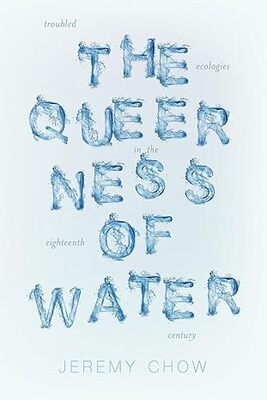
Eighteenth-Century Environmental Humanities
Jeremy Chow
This groundbreaking new volume unites eighteenth-century studies and the environmental humanities, showcasing how these fields can vibrantly benefit one another. In eleven chapters that engage a variety of eighteenth-century texts, contributors explore timely themes and topics such as climate change, new materialisms, the blue humanities, indigeneity and decoloniality, and green utopianism. Additionally, each chapter reflects on pedagogical concerns, asking: How do we teach eighteenth-century environmental humanities? With particular attention to the voices of early-career scholars who bring cutting-edge perspectives, these essays highlight vital and innovative trends that can enrich both disciplines, making them essential for classroom use. -- publisher
Printing is not supported at the primary Gallery Thumbnail page. Please first navigate to a specific Image before printing.