




























-
This Strange Land
Shara McCallum
These poems probe the definition of Motherland. McCallum homogenizes childhood memories of her native Jamaica with a revised understanding of danger and corruption, teasing out notions of history, language, motherhood, rupture, memory, identity. She weaves new cloth of oral tradition, struggling to arrange a comfort zone within the foreign manufactures of suburbia. Hers is the skilled music of a master.
-
India’s Immortal Comic Books: Gods, Kings, & Other Heroes
Karline McLain
Combining entertainment and education, India's most beloved comic book series, Amar Chitra Katha, or "Immortal Picture Stories," is also an important cultural institution that has helped define, for several generations of readers, what it means to be Hindu and Indian. Karline McLain worked in the ACK production offices and had many conversations with Anant Pai, founder and publisher, and with artists, writers, and readers about why the comics are so popular and what messages they convey. In this intriguing study, she explores the making of the comic books and the kinds of editorial and ideological choices that go into their production.
-
Strange Beauty: Ecocritical Approaches to Early Medieval Landscape
Paul Siewers
Strange Beauty brings the developing discipline of environmental literary criticism to bear on narratives of nature and the Otherworld from early cultures around the Irish Sea. Reflecting on an Otherworld associated with human experience, Siewers uses texts such as the Ulster Cycle and the Mabinogi to relate views of nature, symbolism and language. This book uncovers early syntheses of Christian and indigenous Insular cultures which express an integration of the spiritual and physical landscapes that are marginalized in later medieval thought. Strange Beauty opens a window on distinctive alternative views of the relation of culture to nature still relevant today.
-
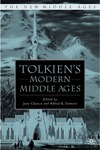
Tolkien's Modern Middle Ages
Paul Siewers and Jane M. Chance
J.R.R. Tolkien delved into the Middle Ages to create a critique of the modern world in his fantasy, yet did so in a form of modernist literature with postmodern implications and huge commercial success. These essays examine that paradox and its significance in understanding the intersection between traditionalist and counter-culture criticisms of the modern. The approach helps to explain the popularity of his works, the way in which they continue to be brought into dialogue with twenty-first century issues, and their contested literary significance in the academy.
-
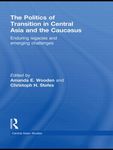
The Politics of Transition in Central Asia and the Caucasus Enduring Legacies and Emerging Challenges
Amanda E. Wooden and Christoph H. Stefes
Most books on the Caucasus and Central Asia are country-by-country studies. This book, on the other hand, fills a gap in Central Eurasian studies as one of the few comparative case study books on Central Eurasia, covering both the Caucasus and Central Asia; it considers key themes right across the two regions highlighting both political change and continuity. Comparative case study chapters, written by regional experts from a variety of methodological backgrounds, provide historical context, and evaluate Soviet political legacies and emerging policy outcomes. Key topics include: the varied types and sources of authoritarianism; political opposition and protest politics; predetermined outcomes of post-Soviet economic choices; social and stability impacts of natural resource wealth; variations in educational reform; international norm influence on gender policy and the power of human rights activists. Overall, the book provides a thorough, up-to-date overview of what is increasingly becoming a significant area of concern.
-
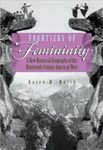
Frontiers of Femininity: A New Historical Geography of the Nineteenth-Century American West
Karen M. Morin
Introduction: The frontiers of femininity -- Trains through the plains : the great plains landscape of Victorian women travelers -- Peak practices : Englishwomen's heroic adventures in the nineteenth-century American West -- Gender, nature, empire : women naturalists in nineteenth-century British women's travel literature (with Jeanne Kay Guelke) -- Surveying Britain's informal empire : Rose Kingsley's 1872 reconnaissance for the Mexican National Railway -- British women travelers and constructions of racial difference across the nineteenth-century American West -- Postcolonialism and Native American geographies : the letters of Rosalie La Flesche Farley, 1896-1899 -- Mining empire : journalists in the American West, circa 1870 -- Afterword: Imprints on a new historical geography of North America.
-
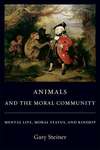
Animals and the moral community : mental life, moral status, and kinship
Gary Steiner
Gary Steiner argues that ethologists and philosophers in the analytic and continental traditions have largely failed to advance an adequate explanation of animal behavior. Critically engaging the positions of Marc Hauser, Daniel Dennett, Donald Davidson, John Searle, Martin Heidegger, and Hans-Georg Gadamer, among others, Steiner shows how the Western philosophical tradition has forced animals into human experiential categories in order to make sense of their cognitive abilities and moral status and how desperately we need a new approach to animal rights. Steiner rejects the traditional assumption that a lack of formal rationality confers an inferior moral status on animals vis-à-vis human beings. Instead, he offers an associationist view of animal cognition in which animals grasp and adapt to their environments without employing concepts or intentionality. Steiner challenges the standard assumption of liberal individualism according to which humans have no obligations of justice toward animals. Instead, he advocates a "cosmic holism" that attributes a moral status to animals equivalent to that of people. Arguing for a relationship of justice between humans and nature, Steiner emphasizes our kinship with animals and the fundamental moral obligations entailed by this kinship. -- publisher
-
Women, Religion, & Space: Global Perspectives on Gender and Faith
Karen M. Morin and Jeanne Kay Guelke
Preface / Karen M. Morin -- Introduction: Women, religion, and space -- making the connections / Karen M. Morin and Jeanne Kay Guelke -- Women in colonial regimes. Repression of Muslim women's movements in colonial East Africa / Jennifer Kopf ; Conversion of native and slave women in Dutch colonial South Africa : from assimilation to apartheid / Leonard Guelke -- Religion & women's mobility. Gender, religion, and urban management : women's bodies and everyday lives in Jerusalem / Tovi Fenster ; A feminist geography of veiling : gender, class, and religion in the making of modern subjects and public spaces in Istanbul / Banu Gökarıksel ; In the lady's seat : cosmopolitan women travelers in Pakistan / Kathryn Besio -- New spaces for religious women. Missionary women in early America : prospects for a feminist geography / Jeanne Kay Guelke and Karen M. Morin ; Korean immigrant women to Los Angeles : religious space, transformative space? / HaeRan Shin -- Afterword / Anna Secor.
-
Postmodern Vernaculars : Chicana Literature and Postmodern Rhetoric
Elisabeth Mermann-Jozwiak
Postmodern Vernaculars examines the work of Chicana authors such as Gaspar de Alba, Anzaldúa, Cantú, Castillo, Cisneros, Mora, Pérez, and Viramontes in relation to theories of postmodernism. Working with a fluid concept of postmodernism, one that traces the term’s evolution from the 1960s to the present, this book argues that Chicana literature is one vernacular, a regional variation of postmodernism. Drawing on the interdisciplinary scholarship that postmodernism itself has enabled – specifically recent developments in the fields of geography, ethnography, photography, history, and linguistics – Postmodern Vernaculars shows that Chicana literature participates in the ongoing reconstruction of postmodernism. -- publisher
-

Teaching Buddhism in the West: From the Wheel to the Web
James Mark Shields
At a time when the popularity of Buddhism is at a peak in the west, both inside and outside the university setting, scholars and students alike are searching for guidance: How should Buddhism, a religion which is ultimately 'foreign' to western experience, be taught? How should one teach central Buddhist doctrines and ideas? Should one teach Buddhist practise; if so how? Until now, those interested in these and other related matters have been left with little guidance. Despite the wealth of scholarly publications on Buddhist traditions and the plethora of books about meditation and enlightenment, a serious lacuna exists in the sphere of teaching Buddhism.
This book fills this lacuna, by providing a series of thematically arranged articles written by contemporary scholars of Buddhism throughout North America. Some of the major themes covered are the history of teaching Buddhism in Europe and North America (Reynolds, Prebish), the problem of representations of Buddhism in undergraduate teaching (Lewis), the problem of crossing cultural and historical divides (Jenkins), the place of the body and mind in the Buddhist classroom (Waterhouse), alternative pedagogical methods in teaching Buddhism (Wotypka, Jarow, Hori, Grimes) and the use of the Internet as a resource, and metaphor for teaching Buddhism (Fenn, Grieder). -
The World of the Tavern: The Public House in Early Modern Europe
Beat Kümin and B. Ann Tlusty
The subject of drink received a great deal of attention from early modern Europeans. Preachers, physicians, authorities, artists and travellers all addressed it from a range of different perspectives. At the same time, inns, taverns and alehouses served as multifunctional centres in towns and villages throughout Europe. This combination resulted in a wealth of sources, both institutional and cultural, which are only now beginning to be explored. This anthology features new research on public houses in England, Russia and the German lands. In a series of general, thematic and regional studies, contributors engage with broader debates in early modern history, shedding light on such key issues as consumption, travel and communication, state building, confessional identity, fiscal practice, gender and household relations, and the use of public spaces. The result is a volume that should appeal to anybody with an interest in early modern cultural history.
-
Bacchus and Civic Order: The Culture of Drink in Early Modern Germany / Bacchus und die bürgerliche Ordnung. Die Kultur des Trinkens im frühneuzeitlichen Augsburg
B. Ann Tlusty
Lining the streets inside the city's gates, clustered in its center, and thinly scattered among its back quarters were Augsburg's taverns and drinking rooms. These institutions ranged from the poorly lit rooms of backstreet wine sellers to the elaborate marble halls frequented by society's most privileged members. Urban drinking rooms provided more than food, drink, and lodging for their guests. They also conferred upon their visitors a sense of social identity commensurate with their status. Like all German cities, Augsburg during the sixteenth and seventeenth centuries had a history shaped by the political events attending the Reformation, the post-Reformation, and the Thirty Years' War; its social and political character was also reflected and supported by its public and private drinking rooms.
In Bacchus and Civic Order: The Culture of Drink in Early Modern Germany, Ann Tlusty examines the social and cultural functions served by drinking and tavern life in Germany between 1500 and 1700, and challenges existing theories about urban identity, sociability, and power. Through her reconstruction of the social history of Augsburg, from beggars to council members, Tlusty also sheds light on such diverse topics as social ritual, gender and household relations, medical practice, and the concerns of civic leaders with public health and poverty. Drunkenness, dueling, and other forms of tavern comportment that may appear "disorderly" to us today turn out to be the inevitable, even desirable result of a society functioning according to its own rules.
-
Matrix Structural Analysis, 2nd Edition
William McGuire, Richard H. Gallagher, and Ronald D. Ziemian
The aims of the first edition of Matrix Structural Analysis were to place proper emphasis on the methods of matrix structural analysis used in practice and to lay the groundwork for more advanced subject matter. This extensively revised Second Edition accounts for changes in practice that have taken place in the intervening twenty years. It incorporates advances in the science and art of analysis that are suitable for application now, and will be of increasing importance in the years ahead. It is written to meet the needs of both the present and the coming generation of structural engineers.
KEY FEATURES
- Comprehensive coverage - As in the first edition, the book treats both elementary concepts and relativity advanced material.
- Nonlinear frame analysis - An introduction to nonlinear analysis is presented in four chapters: a general introduction, geometric nonlinearity, material nonlinearity, and solution of nonlinear equilibrium equations.
- Interactive computer graphics program - Packaged with the text is MASTAN2, a MATLAB based program that provides for graphically interactive structure definition, linear and nonlinear analysis, and display of results.
- Examples - The book contains approximately 150 illustrative examples in which all developments of consequence in the text are applied and discussed.
Printing is not supported at the primary Gallery Thumbnail page. Please first navigate to a specific Image before printing.