
-
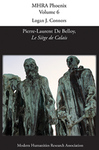
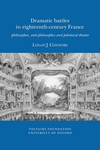
'Le Siège de Calais' by Pierre-Laurent de Belloy
Logan J. Connors
Le Siège de Calais, hailed by its author in 1765 as France’s ‘première tragédie nationale’, rolled into Paris like a storm. Pierre-Laurent de Belloy’s play about French bravery during the Hundred Years’ War (1337-1453) appeared on the heels of France’s defeat in the Seven Years’ War (1756-1763). Le Siège de Calais was performed throughout Europe and published numerous times during the second half of the eighteenth century. De Belloy emerged as a national hero, receiving prizes from Louis XV, accolades from the city of Calais, and membership to the prestigious Académie française. Since the French Revolution, however, the popularity of Le Siège de Calais has eclipsed, owing to its overt glorification of France’s royal machine. Several hundred years later, the play warrants a fresh look from a holistic perspective. De Belloy’s tragedy and the varied responses it provoked – many of which are included in this edition – offer complex representations of French political history and patriotic sentiment. Le Siège de Calais reveals conflicting images of gender roles, political debate and family values during the twilight of the Ancien régime; it also constituted one of the last moments when serious drama asserted its role as a popular force.
-
Re-Collection: Art, New Media, & Social Memory
Rick Rinehart and Jon Ippollito
How will our increasingly digital civilization persist beyond our lifetimes? Audio and videotapes demag- netize; CDs delaminate; Internet art links to websites that no longer exist; Amiga software doesn’t run on iMacs. In Re-collection, Richard Rinehart and Jon Ippolito argue that the vulnerability of new media art illustrates a larger crisis for social memory. They describe a variable media approach to rescuing new media, distributed across producers and consumers who can choose appropriate strategies for each en- dangered work.
New media art poses novel preservation and conservation dilemmas. Given the ephemerality of their mediums, software art, installation art, and in- teractive games may be heading to obsolescence and oblivion. Rinehart and Ippolito, both museum professionals, examine the preservation of new me- dia art from both practical and theoretical perspec- tives, offering concrete examples that range from Nam June Paik to Danger Mouse. They investigate three threats to twenty-first-century creativity: tech- nology, because much new media art depends on rapidly changing software or hardware; institutions, which may rely on preservation methods developed for older mediums; and law, which complicates ac- cess with intellectual property constraints such as copyright and licensing. Technology, institutions, and law, however, can be enlisted as allies rather than enemies of ephemeral artifacts and their pres- ervation. The variable media approach that Rinehart and Ippolito propose asks to what extent works to be preserved might be medium-independent, trans- latable into new mediums when their original for- mats are obsolete.
-
Reference and Referring
William P. Kabasenche, Michael O'Rourke, and Matthew H. Slater
These fifteen original essays address the core semantic concepts of reference and referring from both philosophical and linguistic perspectives. After an introductory essay that casts current trends in reference and referring in terms of an ongoing dialogue between Fregean and Russellian approaches, the book addresses specific topics, balanc ing breadth of coverage with thematic unity.
The contributors, all leading or emerging scholars, address trenchant neo-Fregean challenges to the direct reference position; consider what positive claims can be made about the mechanism of reference; address the role of a theory of reference within broader theoretical context; and investigate other kinds of linguistic expressions used in referring activities that may themselves be referring expressions.
-
The Environment: Philosophy, Science, and Ethics
Matthew H. Slater, William P. Kabasenche, and Michael O'Rourke
Philosophical reflections on the environment began with early philosophers’ invocation of a cosmology that mixed natural and supernatural phenomena. Today, the central philosophical problem posed by the environment involves not what it can teach us about ourselves and our place in the cosmic order but rather how we can understand its workings in order to make better decisions about our own conduct regarding it. The resulting inquiry spans different areas of contemporary philosophy, many of which are represented by the fifteen original essays in this volume.
The contributors first consider conceptual problems generated by rapid advances in biology and ecology, examining such topics as ecological communities, adaptation, and scientific consensus. The contributors then turn to epistemic and axiological issues, first considering philosophical aspects of environmental decision making and then assessing particular environmental policies (largely relating to climate change), including reparations, remediation, and nuclear power, from a normative perspective. -

Augsburg during the Reformation Era: An Anthology of Sources
B. Ann Tlusty
Edited and Translated, with an Introduction, by B. Ann Tlusty
-
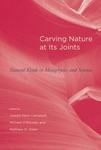
Carving Nature at its Joints: Natural Kinds in Metaphysics and Science
Joseph Keim Campbell, Michael O'Rourke, and Matthew H. Slater
Contemporary discussions of the success of science often invoke an ancient metaphor from Plato's Phaedrus: successful theories should "carve nature at its joints." But is nature really "jointed"? Are there natural kinds of things around which our theories cut? The essays in this volume offer reflections by a distinguished group of philosophers on a series of intertwined issues in the metaphysics and epistemology of classification.
The contributors consider such topics as the relevance of natural kinds in inductive inference; the role of natural kinds in natural laws; the nature of fundamental properties; the naturalness of boundaries; the metaphysics and epistemology of biological kinds; and the relevance of biological kinds to certain questions in ethics. Carving Nature at Its Joints offers both breadth and thematic unity, providing a sampling of state-of-the-art work in contemporary analytic philosophy that will be of interest to a wide audience of scholars and students concerned with classification.
-

The Face of Water: New and Selected Poems
Shara McCallum
McCallum’s poems reflect her rooting in a Jamaican experience unique for her childhood in a Rastafarian home filled with reckless idealism, the potential for profound emotional pathology, and the grounding of old folks traditions. Her work has explored what it means to emerge from such a space and enter a new world of American landscapes and values. The Face of Water collects some of Shara Mccallum’s best poems, poems that establish her as a poet of deft craft (and craftiness), whose sense of music is caught in her mastery of syntax and her ear for the graceful line. She manages in these poems to enact the grand alchemy of the best poems—the art of transforming the most painful and sometimes mundane details of life into works of terrible and satisfying beauty. McCallum demonstrates eloquently her debt to the poetics of the Caribbean and of North America, even as she establishes herself as a vital voice in the later tradition of poetry written in mutable language, English. As poet she feels no hesitation about turning that language into a very personal music. The Face of Water is an excellent introduction to the poetry of Shara McCallum, a vital and exciting poet of pure elegance.
From Jamaica, Shara McCallum is the author of This Strange Land, Song of Thieves, and The Water Between Us. She teaches and directs the Stadler Center for Poetry at Bucknell University.
-

Public Drinking in the Early Modern World: Voices from the Tavern, 1500-1800
B. Ann Tlusty
Until recently the role of the public drinking house has been approached from elitist, folkloric and anecdotal perspectives. The work of a new generation of social historians, however, has raised the tavern’s profile in the academic consciousness and confirmed its position within the mainstream of social and cultural history. It is now recognized that an understanding of the centrality of public drinking to the development of both elite and popular culture is vital to studies of social behaviour. The study of taverns has also been at the forefront of emerging interest in the history of consumption and material culture, and has contributed to a richer understanding of economic history. Constructions of gender and identity are also visible through research into the patterns of behaviour and discourse in and around the public house.
This four-volume reset edition presents a wide-ranging collection of primary sources which uncover the language and behaviour of local and state authorities, of peasants and town-dwellers, and of drinking companions and irate wives. The documents are translated and set in their social and historical context, providing a multidisciplinary collection that will be of great importance to scholars of all areas of social and cultural history of the early modern period.
The vast majority of this material is published here for the first time, ensuring that the collection will open up new avenues of research. Volume 1 draws heavily from the Parisian police archives and includes inspectors’ reports, complaints by the general public and details of court cases to build a picture of drinking in early modern France. Volumes 2 and 3 address public drinking in the Holy Roman Empire through a variety of chronicles, civic ordinances, court records, travel reports and surveys of public houses. Volume 4 locates taverns within a broader analysis of America’s public houses, drawing on visual material as well as journal entries, business reports and newspaper articles. Each volume is accompanied by editorial introductions and is annotated to provide readers with a high-quality resource of scholarly material.
-
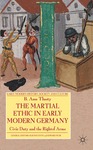
The Martial Ethic in Early Modern Germany: Civic Duty and the Right of Arms
B. Ann Tlusty
For German townsmen, life during the sixteenth and seventeenth centuries was characterized by a culture of arms. Because the urban citizenry, made up of armed households, represented the armed power of the state, men were socialized to the martial ethic from all sides. This book shows how civic institutions, peer pressure, and the courts all combined to create and repeatedly confirm masculine identity with blades and guns. Who had the right to bear arms, who was required to do so, who was forbidden or discouraged from using weapons: all these questions were central both to questions of political participation and to social and gender identity. As a result, there were few German households that were not stocked with weapons and few men who walked town streets without a side arm within easy reach. Laws aimed at preventing or containing violence could only be effective if they functioned in accordance with this framework.
-
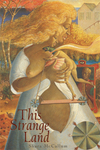
This Strange Land
Shara McCallum
These poems probe the definition of Motherland. McCallum homogenizes childhood memories of her native Jamaica with a revised understanding of danger and corruption, teasing out notions of history, language, motherhood, rupture, memory, identity. She weaves new cloth of oral tradition, struggling to arrange a comfort zone within the foreign manufactures of suburbia. Hers is the skilled music of a master.
-
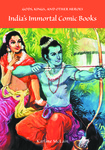
India’s Immortal Comic Books: Gods, Kings, & Other Heroes
Karline McLain
Combining entertainment and education, India's most beloved comic book series, Amar Chitra Katha, or "Immortal Picture Stories," is also an important cultural institution that has helped define, for several generations of readers, what it means to be Hindu and Indian. Karline McLain worked in the ACK production offices and had many conversations with Anant Pai, founder and publisher, and with artists, writers, and readers about why the comics are so popular and what messages they convey. In this intriguing study, she explores the making of the comic books and the kinds of editorial and ideological choices that go into their production.
-
Strange Beauty: Ecocritical Approaches to Early Medieval Landscape
Alf Siewers
Strange Beauty brings the developing discipline of environmental literary criticism to bear on narratives of nature and the Otherworld from early cultures around the Irish Sea. Reflecting on an Otherworld associated with human experience, Siewers uses texts such as the Ulster Cycle and the Mabinogi to relate views of nature, symbolism and language. This book uncovers early syntheses of Christian and indigenous Insular cultures which express an integration of the spiritual and physical landscapes that are marginalized in later medieval thought. Strange Beauty opens a window on distinctive alternative views of the relation of culture to nature still relevant today.
-
Tolkien's Modern Middle Ages
Alf Siewers and Jane M. Chance
J.R.R. Tolkien delved into the Middle Ages to create a critique of the modern world in his fantasy, yet did so in a form of modernist literature with postmodern implications and huge commercial success. These essays examine that paradox and its significance in understanding the intersection between traditionalist and counter-culture criticisms of the modern. The approach helps to explain the popularity of his works, the way in which they continue to be brought into dialogue with twenty-first century issues, and their contested literary significance in the academy.
-
The Politics of Transition in Central Asia and the Caucasus Enduring Legacies and Emerging Challenges
Amanda E. Wooden and Christoph H. Stefes
Most books on the Caucasus and Central Asia are country-by-country studies. This book, on the other hand, fills a gap in Central Eurasian studies as one of the few comparative case study books on Central Eurasia, covering both the Caucasus and Central Asia; it considers key themes right across the two regions highlighting both political change and continuity. Comparative case study chapters, written by regional experts from a variety of methodological backgrounds, provide historical context, and evaluate Soviet political legacies and emerging policy outcomes. Key topics include: the varied types and sources of authoritarianism; political opposition and protest politics; predetermined outcomes of post-Soviet economic choices; social and stability impacts of natural resource wealth; variations in educational reform; international norm influence on gender policy and the power of human rights activists. Overall, the book provides a thorough, up-to-date overview of what is increasingly becoming a significant area of concern.
-
Frontiers of Femininity: A New Historical Geography of the Nineteenth-Century American West
Karen M. Morin
Introduction: The frontiers of femininity -- Trains through the plains : the great plains landscape of Victorian women travelers -- Peak practices : Englishwomen's heroic adventures in the nineteenth-century American West -- Gender, nature, empire : women naturalists in nineteenth-century British women's travel literature (with Jeanne Kay Guelke) -- Surveying Britain's informal empire : Rose Kingsley's 1872 reconnaissance for the Mexican National Railway -- British women travelers and constructions of racial difference across the nineteenth-century American West -- Postcolonialism and Native American geographies : the letters of Rosalie La Flesche Farley, 1896-1899 -- Mining empire : journalists in the American West, circa 1870 -- Afterword: Imprints on a new historical geography of North America.
Printing is not supported at the primary Gallery Thumbnail page. Please first navigate to a specific Image before printing.