

Files
Download Full Text (9.6 MB)
Publication Date
11-10-2026
Description
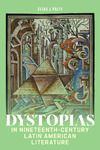
How did nineteenth-century Latin American novelists respond to moments when history itself seemed to come undone? Rather than treating dystopia as a futuristic genre, Palti traces its emergence from concrete political crises in Mexico, Argentina, and Brazil, as writers confronted national defeat, dictatorship, and revolutionary uncertainty. Reading Mexican fiction written after the U.S. occupation; Argentine texts produced under Juan Manuel de Rosas, including works by Esteban Echeverría, Domingo F. Sarmiento, and José Mármol; and Brazilian novels from the transition from Empire to Republic, with particular attention to Machado de Assis, the book shows how narrative form begins to falter. Plots stall, identities fragment, and stories resist closure. These breakdowns constitute early dystopian modes—atopia-atropia, heterotopia, and transtopia—through which literature registers the collapse of historical intelligibility. By locating dystopia in narrative form rather than theme, Palti offers a rich new account of literature under political catastrophe.
Keywords
Latin American literature, Mexican literature, Brazilian literature, Argentine literature, dystopian literature
Rights
Copyright © 2027 by Elías J. Palti
Language
eng
ISBN
9781684486182