

Files
Download Full Text (7.7 MB)
Publication Date
5-12-2026
Description
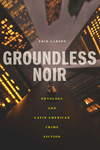
This philosophical study of Latin American noir fiction poses the question, What if precarity and uncertainty aren’t just themes of the genre but ways of being in the world? Emerging from a region immersed in violence, trauma, and political instability, the novela negra reveals not just disillusionment but a desire to adapt to, even dwell within, chaos. In the hands of writers like Ricardo Piglia, Roberto Bolaño, and Patricia Melo, savvy detectives and antiheroes navigate a world in which meaning constantly shifts and certainty is elusive. Blending literary analysis with philosophical inquiry, Larson draws on Heideggerian ontology to demonstrate how the noir novel becomes a mode of existence—grounded in its very groundlessness. Rather than offering resolution, these novels embody a paradoxical desire: to engage crisis while also adapting to it. In doing so, they become both ideological and pedagogical—existential fiction for an uncertain world.
Keywords
Novela Negra, Noir, Film noir, Roman noir, Martin Heidegger, Ontology, metaphysics, Ricardo Piglia, Claudia Piñeiro, Patricia Melo, Ignacio Padilla, Crack Manifesto, Crack, Mexican Crack, Boom, Ernesto Mallo, Friedrich Nietzsche, Jorge Luis Borges, Roberto Bolaño, Paco Ignacio Taibo II, Jorge Volpi, Manuel Puig, José Pablo Feinmann, Detective novel, Crime fiction, Juan Martini, Osvaldo Soriano, Hugo Burel, Ramón Díaz Eterovic, Roberto Ampuero, Raymond Chandler, Postmemory, memory, Jacques Derrida, Frederic Jameson, Dictatorship, Post-dictatorship, Trauma, Sovereignty, Postmodernism, Mediascape, Noir mediascape, Thrownness, Noir economics, Capitalism
Rights
Copyright © 2026 by Erik Larson
Language
eng
ISBN
9781684485901