

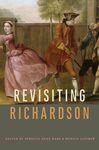
Revisiting Richardson
Files
Publication Date
4-15-2025
Related
Description
The preoccupations of eighteenth-century novelist Samuel Richardson—the inequities of gender and sexuality; race and white femininity; masculinity, sadism, and control; religion and selfhood; authorship and artistic form—continue to resonate with contemporary readers. This fresh collection reconsiders his oeuvre, expanding and significantly updating critical debate on its meaning and importance. In these lively and engaging essays, contributors examine historically overlooked works, provide new readings of his best-known novels Pamela and Clarissa, and stake a serious claim for the importance of his final novel, Sir Charles Grandison. Diverse, inventive, and provocative, these essays demonstrate the complexity, relevance, and surprising legacies of Richardson’s novels and characters—finding traces in post-conceptual poetry, detective fiction, and in the fantasies of historical romance. Revisiting Richardson reflects on a decade of scholarship while delivering innovative perspectives on an author whose work continues to be indispensable for understanding the history of the novel.
Keywords
Samuel Richardson, Richardsonian, Sexuality, Sadism, gender and sexuality, history of the novel, Eighteenth-century novel, Eighteenth-century fiction, The Apprentice’s Vade Mecum, Pamela, Pamela, or, Virtue Rewarded, Pamela in her Exalted Condition, Didacticism, Sentiment, Sentimental novel, Instruction manuals, Happiness, Conceptual writing, Post-conceptual literature, Post-print, Clarissa, Trisha Low, Marquis de Sade, Pathological desire, Masculinity, white femininity, Plot, gender, Erasure, White supremacy, The Black Atlantic, Imperialism, Misogyny, Sir Charles Grandison, Male virgin, Virtue, Patriarchy, Historical romance, Detective fiction, post-conceptual poetry, Character, Authorship, selfhood, Fictive kinship, Queer theory, Temporality, Domesticity, Grandison reception, legacy, Bonnie Latimer, Rebecca Anne Barr
Rights
© 2025 by Bucknell University Press. Individual chapters copyright © 2025 in the names of their authors.
Language
eng
ISBN
9781684485659