

Files
Download Full Text (16.2 MB)
Publication Date
8-12-2025
Description
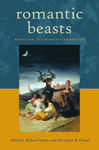
By staging human-animal encounters, Romantic literature and art repeatedly questioned how "human" animals could be and how "animal" humans in fact are. Romantic-era authors and artists often depicted perplexing animal intrusions upon humans. Sometimes the intruders were mystifying or terrifying, like Coleridge’s albatross or Poe’s raven; sometimes they were mundane, as in “The Swallow” by Smith or “To a Mouse” by Burns—regardless, encounters with animal-others occasioned Romantic musings. This collection builds on existing scholarship while deploying new methodological approaches from gender studies, posthumanism, postcolonialism, disability studies, and digital studies to deepen our understanding of why animal-human encounters were so prevalent in the creative work and cultural discourse of the Romantic period, including the rhetoric of social movements like transatlantic abolitionism. Taken together, the chapters demonstrate the range and complexity of Romantic representations of human-animal interactions and conceptualizations of animality, nonhuman life, and not-wholly-human life.
Keywords
environmental humanities, Romantic literature, Romanticism, animality, animal studies, literary animals, abolition, Aboriginal, Mary Ann Parker, A Voyage Round the World, Edmund Burke, Waiting for Godot, Samuel Beckett, swine, pig, Romantic birds, poodles, E.T.A. Hoffmann, Lebensansichten des Katers Murr, The Life and Opinions of the Tomcat Murr, Eugène Delacroix, Mephistopheles, Faust, Goethe, Zoophytes, Posthumanist, creature, monkeys, donkeys, French Art-World, caricature, menagerie, Digital Humanities, horses, Romantic art, Romantic paintings, French Romanticism, beasts, melodrama, Gothic paintings, Animal rights, Eclecticism, Human-animal relations, Industrialism, Imperialism, British Empire, PETA, Emancipation, Jeremy Bentham, Natural history, Nature, Import, export of animals, Working class, To a Skylark, Animal symbolism, The Swallow, Ann Radcliffe, Dorothy Wordsworth, Animal poetry, German Romanticism, Animal perspectives, German literary animals, Great Chain of Being, Abraham Trembley, French Caricature, Art world satire, Nineteenth Century art, Théodore Géricault, La Belle Sauvage, Aesthetic Theory, The sublime, Monsters, James Cook, Apes, Dogs, Elephant, Samuel Coleridge, Erasmus Darwin, Gulliver’s Travels, The Floating Kingdom or The Last Voyage of Captain Cook
Rights
© 2025 by Bucknell University Press. Individual chapters copyright © 2025 in the names of their authors.
Language
eng
ISBN
9781684485581